
Monitoring, understanding, responding, and learning from past epidemics: the key role of the epidemiologist in the face of Ebola
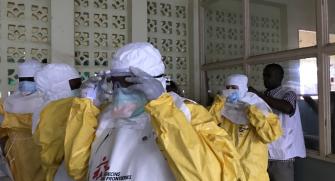
In the days following the outbreak declaration, Epicentre deployed two epidemiological coordinators to work alongside Médecins Sans Frontières (MSF) teams: Gaston Komanda in Mongbwalu, the epicenter of the outbreak in Ituri Province, and Flavio Finger in Butembo, an outbreak hotspot in North Kivu. (Additional epidemiologists have since been deployed to strengthen the outbreak response.)
Their mission: to help MSF teams and other stakeholders better understand the progression of the outbreak in order to adapt the medical response in real time. Acting as a bridge between the various MSF sections, they implement tools to collect and analyze essential data: number of cases, symptoms, clinical progression, patient pathways, and contact tracing. But their role is not limited to producing numbers. Epidemiologists help transform field data into actionable insights to guide operational decisions.
Two field sites, two very different contexts, but one common goal: to make the response to the outbreak faster, more precise, and more effective.

What was your first challenge upon arriving in Mongbwalu, which is considered the epicenter of the outbreak?
Gaston: In Mongbwalu, the first challenge was access. The teams were having difficulty getting around, and few alerts were coming in from certain health zones, even though we knew the disease was there. So our priority was to strengthen epidemiological surveillance. We helped recruit and train investigators, then equipped them with motorcycles so they could reach the hardest-to-reach areas. The selection of these investigators in a region marked by the presence of numerous armed groups is crucial. Their knowledge of the terrain and their acceptance by the communities facilitated access to certain areas where humanitarian workers typically encounter difficulties.
We then provided material support in the form of ambulances and telephones to the alert center.
Some areas still have very limited coverage and continue to report few or no alerts. We are therefore seeking to understand whether this situation truly reflects an absence of cases or persistent difficulties in detection and reporting.
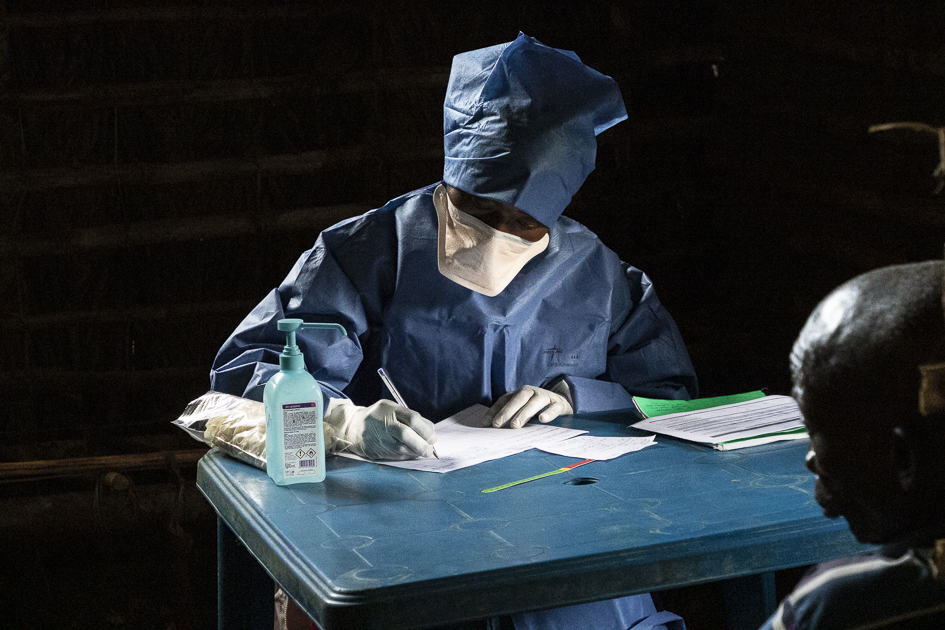
Data collection was another major focus. This region had never experienced an Ebola outbreak before. In several health facilities, it was necessary to provide additional training to healthcare workers on identifying suspected cases and ensuring the quality of data collection. In Mongbwalu, as well as at the Ebola Treatment Center (ETC) in Bunia (specifically in the Rwampara health zone) managed by MSF, standardized linear lists are now in place. The data collected will be essential for understanding the dynamics of the outbreak.
Can we already draw some initial lessons from this outbreak?
Flavio: In Butembo, one of the strengths of the current response is that the region had already faced the Ebola virus on several occasions, most notably during the tenth outbreak between 2018 and 2020. Health authorities and the various stakeholders involved have a better grasp of the response mechanisms and procedures to be implemented. The main challenge has been to gather and organize data scattered across different systems, managed by different people, and sometimes still kept on paper. With the approval of the Ministry of Health, we have helped centralize this information and thus reconstruct the history of the majority of the approximately 80 confirmed cases [Editor’s note: as of July 2]. One of the initial findings is that a significant proportion of those who tested positive had visited a large number of health facilities that lacked the equipment to treat Ebola cases, which raises important questions regarding the detection, referral, and care of patients.
Furthermore, teams now have more detailed data on the symptoms observed in patients. Since the early signs of the disease resemble those of other common illnesses in the region, it remains difficult to quickly identify individuals who are actually infected with the Bundibugyo virus. The goal is therefore to identify more specific signs in order to develop an algorithm for classifying patients based on their likelihood of being infected. This would help prioritize diagnosis, isolation, and contact tracing for those most at risk, while more quickly directing other patients to appropriate care. The data collected will also allow us to refine our estimate of the Bundibugyo virus’s case fatality rate.
What are the next priorities for Epicentre’s epidemiologists?
Gaston: This time, the goal is not only to estimate the risk of infection but also to anticipate the clinical course of patients whose infection has already been confirmed. To this end, we are working on developing a clinical database that will help identify factors associated with an increased risk of disease progression in people infected with the Bundibugyo virus. This knowledge could be used, among other things, to develop a disease-specific prognostic severity score. Such a tool would help medical teams identify patients at risk of complications earlier, at a stage when intervention is still possible, in order to tailor their care and improve their chances of survival. We are currently in discussions with the Ministry of Health regarding its implementation.
Flavio: Another challenge is improving our understanding of transmission chains, particularly by incorporating more qualitative data, such as exposure narratives, into existing tools, in order to better document the contexts of transmission (within families, at funerals, or in healthcare settings).
Analyzing these transmission chains can also provide us with valuable information on key parameters of the epidemic, particularly the latent period, that is, the time between infection with the Bundibugyo virus and the point at which a person becomes contagious, as well as the incubation period, which is the interval between infection and the onset of the first symptoms.
Since we are dealing with a relatively poorly documented species of Ebola virus, every piece of data collected helps refine our understanding of the disease. This information is essential for better understanding its transmission dynamics and adapting surveillance and control strategies during future outbreaks.
And what lessons can we learn from previous outbreaks?
Flavio: Reconstructing transmission chains during the 10thEbola outbreak, between 2018 and 2020, proved to be highly informative. It provided a better understanding of the patterns and drivers of transmission. One major finding stands out: a minority of individuals account for most infections, while approximately 80% of infected people do not transmit the disease. However, there is no typical profile for the most contagious individuals, which complicates targeting strategies. Analyses show that certain factors significantly increase the risk of transmission: not being isolated in a timely manner, dying outside a specialized facility, not being identified as a close contact or spending a large number of days in the community without medical care. We must now determine what aspects are applicable to or differ from the Bundibugyo virus.
How can we build on these lessons?
Gaston: These results confirm the importance of the pillars of the response: identification and contact tracing, rapid isolation of patients, and vaccination. When properly implemented, they can significantly reduce transmission.
But one key point also emerged during the10thepidemic: their effectiveness depends on coordinating efforts around cases and transmission chains, rather than organizing them into siloed activities. In other words, the approach should be based on individual cases or clusters of cases rather than operating contact tracing, isolation, or vaccination separately. This integrated approach allows for a more responsive and targeted response.
However, these systems remain fragile, particularly in contexts of insecurity or violence, where their effectiveness is compromised, as was also demonstrated during the 2018–2020 epidemic. This underscores a key point: the success of these strategies depends on the trust of communities. Strengthening this trust is essential, particularly to ensure compliance with contact tracing and isolation measures.
What about research into vaccines and treatments for the Bundibugyo virus?
Gaston: Numerous discussions are underway, involving several Epicentre teams as well as local and international partners, to explore various research avenues.
While we await vaccines specific to the Bundibugyo virus, one of the approaches being considered is to evaluate the potential of vaccines developed against the Zaire and Sudan Ebola viruses. The goal would be to determine to what extent these vaccines could offer protection against the Bundibugyo virus.
In fact, initial field observations seem to suggest that people vaccinated against the Zaire Ebola virus during the tenth Ebola outbreak in the DRC are at lower risk of developing severe forms of the disease. However, these observations remain preliminary and will need to be confirmed by more in-depth scientific analyses.
Reconsidering the rVSVΔG-ZEBOV-GP vaccine during the 2026 Bundibugyo virus outbreak.
Flavio: Epidemiological data also play a vital role in preparing for future clinical trials. They provide a better understanding of the virus’s transmission dynamics, help identify the most at-risk populations, and pinpoint the areas where conducting vaccine or therapeutic trials would be most appropriate.
Beyond their value for the immediate response to the outbreak, these data help create the conditions necessary for developing new knowledge and new tools to combat the Bundibugyo virus. They are indispensable for designing scientifically robust studies, while considering operational realities and constraints on the ground.
Find out more
MSF’s response to the Ebola virus disease outbreak: update as at 16 July
Since the start of the outbreak, MSF teams in Ituri, North Kivu, South Kivu and Tshopo provinces have established Ebola Treatment Centres in Bunia, Mongbwalu, Komanda, Goma, Butembo, Bukavu, and Lwiro, as well as more than 15 isolation units. Additional isolation and treatment facilities are being prepared across the affected provinces. MSF has also strengthened infection prevention and control measures in health facilities it supports. In addition, MSF is carrying out a wide range of critical activities, including community engagement, support for surveillance activities, training health workers in infection prevention and control, supplying health facilities with medicines and equipment, and helping to ensure the continuity of essential healthcare services beyond the Ebola disease response. Hundreds of tonnes of medical supplies and equipment have been shipped from Kinshasa and abroad, and more than 2,200 staff are currently involved in MSF's Ebola response, including 800 Ministry of health staff supported by MSF.
© Alexis Huguet