

Sickle cell disease: documenting and improving acess to hydroxyurea in sub-Saharan Africa
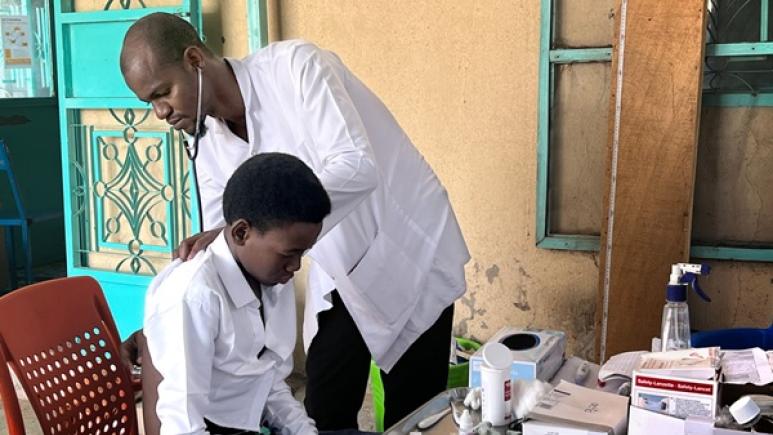
Sickle cell disease is the most common hereditary genetic disorder in the world, affecting more than 5 million people. The World Health Organization (WHO) estimates that around 150 million individuals carry a mutation in one of the two genes encoding hemoglobin S, the protein responsible for sickle cell disease. These carriers—known as heterozygotes or “healthy carriers”—do not develop symptoms but can transmit the mutation to their children. The disease only manifests clinically in homozygotes, when both copies of the gene, one inherited from the mother and one from the father, are mutated.
According to the WHO, 240,000 children are born with sickle cell disease in Africa every year. Most will die before the age of five due to the absence of early diagnosis and limited access to appropriate treatment. To date, the only curative options are bone marrow transplants and gene therapy, which is still in the experimental stage. Both remain out of reach for the vast majority of patients because of their very high cost and the need for highly specialized hospital infrastructure.
Hydroxyurea, a standard treatment still underused
Over the past two decades, hydroxyurea has become the reference treatment for severe forms of sickle cell disease. This oral medication stimulates the production of fetal hemoglobin, which compensates for the absence of hemoglobin S, thereby reducing the frequency of vaso-occlusive crises, acute chest syndromes, and hospitalizations. It is now included on the WHO's list of essential medicines.
Despite its proven effectiveness, hydroxyurea remains underused in sub-Saharan Africa due to its cost, the need for regular biological monitoring, and limited access to healthcare facilities. To better understand the practical conditions for implementing and scaling up hydroxyurea treatment, Epicentre is currently conducting two studies in collaboration with Médecins Sans Frontières (MSF).
In Niger: understanding the impact of hydroxyurea
Since 2019, MSF has been diagnosing and treating children and adolescents with sickle cell disease at the Mother and Child Health Center (CSME) in Diffa and at the Madarounfa hospital in southeastern Niger. A major step forward was achieved with the introduction of hydroxyurea—first in Madarounfa in 2022, then in Diffa in 2024. A total of 70 adolescents, selected based on the severity of their condition, were able to benefit from this treatment starting in 2024.
In parallel, Epicentre is carrying out a descriptive and analytical study among these adolescents to document how sickle cell disease is managed in this context, particularly the use of hydroxyurea in rural settings, an area that remains poorly described in resource‑limited countries.
The study comprises three complementary components:
- Assess the impact of hydroxyurea on quality of life, using a tool adapted to the age of the participants and specifically designed for people living with sickle cell disease, covering 43 indicators related to quality of life.
- Evaluate the evolution of the clinical severity of complications in real‑world conditions by matching a group of patients receiving hydroxyurea to a similar group not receiving it, then after 12 months, comparing the evolution of severity scores in the two groups to measure the difference in treatment impact.
- Document the implementation of hydroxyurea as a preventive strategy against sickle cell complications in this context; explore the perceptions and experiences of healthcare professionals, patients, and their caregivers; and develop recommendations for a scalable, sustainable, and context‑appropriate rollout.
The initial finding of the first phase are encouraging:
“Data from around 30 children show a clear improvement in quality‑of‑life scores six months after starting treatment, with even more pronounced progress observed at twelve months,” expains Fara Temessadouno, principal investigator of the study in Niger.
In Uganda: documenting decentralization for better deployment
In Uganda, hydroxyurea has been included on the national list of essential medicines since 2016, yet its use remains limited. In Kasese, MSF runs the Kasese Adolescent Clinic, a health center level 3 (HC3) dedicated to adolescents aged 10 to 19. For Sickle Cell Disease, MSF decided to offer young people aged 9 months to 19 years better access to treatment. In 2025, in order to facilitate regular patient follow-up, MSF extended its support to two additional centers, calling ‘‘Satellites’, located in Kasese and dedicated to the treatment of sickle cell disease. This expansion will continue in 2026 with the integration of two other level 3 health centers. Together, these initiatives are making it possible to implement the decentralized model of sickle cell disease care.
Currently, 605 young people with sickle cell disease are being monitored there, 279 of whom have started treatment with hydroxyurea. Initiations are continuing.
“Once the patient has reached the maximum tolerated dose and is clinically stable, follow-up appointments should be spaced out (i.e., every 3 to 12 months) unless the patient develops complications. One of the medium- and long-term objectives of the decentralization model is to begin initiating patients directly on hydroxyurea at satellite health centers. We consider decentralized follow-up, inspired by the differentiated models used for HIV or hypertension,” explains Dr Abdoul Kassim TOURE, MSF medical coordinator in Uganda.
This approach combines follow‑up at the patient’s nearest health facility, task‑sharing with the satellite’s health center, and personalized monitoring to limit patient travel. Patients only need to visit the Kasese Adolescent Clinic in case of complications or for their annual check-up, as it will remain the reference facility.
The objective is to strengthen adherence to treatment and ensure continuity of care. But because robust data outside specialized centers is lacking, evaluating this decentralized model is essential. Epicentre has therefore launched an observational study to better document the cohort of adolescents being monitored and how the program works. The study describes the care pathway, analyzes clinical data before and after the introduction of hydroxyurea, identifies side effects, and establishes the sociodemographic profile of patients.
A second phase will then explore the feasibility of the model: continuity of care, treatment adherence, appointment attendance, and turnaround times for laboratory results. These indicators are essential to determine what works—and what still needs adjustment—in the decentralization of care.
Finally, interviews and focus groups will explore the acceptability of the model among patients and caregivers.
“We want to identify the obstacles, equipment needs, training, and support required to ensure its effective implementation in local health centers,” says Robin Nesbitt, epidemiologist at Epicentre and principal investigator of the study in Uganda.
This data could serve as a basis for scaling up this approach and supporting its adoption by national authorities.
At the crossroads of research and programmatic evaluation, these two studies illustrate the growing desire to adapt treatments to real‑world contexts and the challenges faced by patients. By documenting both the clinical impact of hydroxyurea and the practical conditions required for its implementation, they have the potential to remove key barriers to its use and drive lasting improvements in the care of people living with sickle cell disease.
©Ousseina Harouna